Introduction
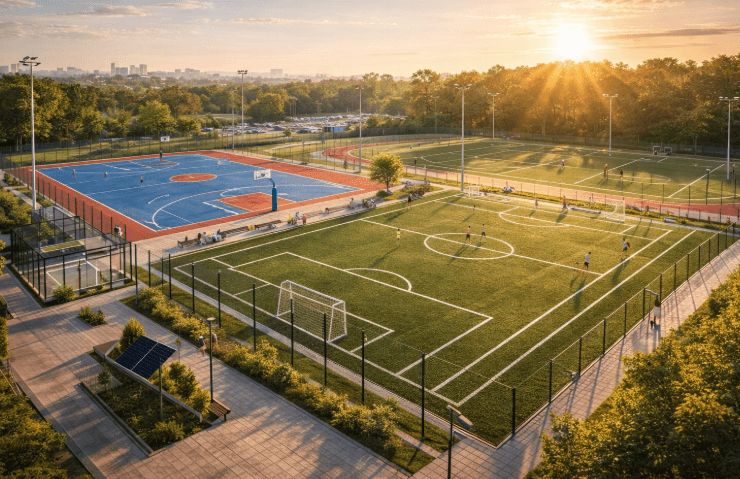
Communities are rethinking how they invest in sports infrastructure. Rather than building venues that host only a handful of major events each year, many cities are prioritizing facilities that deliver consistent value to residents while attracting visitors throughout the year. The goal is no longer to build the biggest stadium, but to create flexible spaces that strengthen local economies, support healthy lifestyles, and remain financially sustainable over the long term.
Sports tourism has become a major driver behind this shift. UN Tourism reports that it now accounts for roughly 10% of the global tourism market, with an estimated annual growth rate of 17.5% between 2023 and 2030. This rapid expansion presents a significant opportunity for municipalities looking to increase visitor spending, create jobs, and strengthen local businesses.
Success, however, depends on thoughtful planning rather than ambitious construction alone. Communities that achieve lasting results rely on detailed feasibility studies, realistic financial projections, and experienced operational planning before construction begins. Instead of building oversized venues with uncertain returns, many are investing in facilities designed to serve residents every day while remaining capable of hosting regional tournaments and special events.
By combining data-driven planning with long-term operational strategies, cities can create facilities that support Sport Economic Development while generating measurable benefits for businesses, residents, and local governments alike.
Looking Beyond Short-Term Returns
Large sports projects often generate excitement, but public officials are increasingly expected to prove that these investments will continue delivering value long after the ribbon-cutting ceremony. Residents want facilities that improve everyday life, not just venues that host occasional headline events.
Purpose-built community sports complexes address this challenge by creating spaces that remain active throughout the year. Daily programming, youth leagues, fitness activities, and local events provide steady utilization, while tournaments and regional competitions bring additional visitors during peak periods. This balanced approach helps maximize both community impact and financial sustainability.
The Financial Reality of Community Sports Facilities
Convincing taxpayers and elected officials to support a major sports development requires more than optimistic projections. Many communities have seen expensive professional stadium projects struggle to produce the economic returns originally promised.
Economic research supports this cautious approach. The Brookings Institution notes that stadium construction represents a worthwhile public investment only when it clearly outperforms other possible uses of local resources.
The key distinction lies in how frequently the facility is used.
Professional stadiums often sit empty for extended periods between games or concerts. Community-focused facilities, on the other hand, remain active nearly every day through local recreation programs, practices, camps, leagues, tournaments, and community gatherings. Instead of relying on a few major events, they generate consistent activity that benefits both residents and nearby businesses.
| Feature | Professional Mega-Stadiums | Purpose-Built Community Assets |
| Primary Audience | Spectators and professional sports fans | Athletes, families, schools, and community members |
| Facility Usage | Limited event schedule | Daily programming with weekend tournaments |
| Financial Risk | High public investment with uncertain returns | More balanced investment with diversified revenue |
| Economic Contribution | Event-based spending spikes | Consistent support for local businesses |
Because these facilities remain active year-round, they provide more predictable economic benefits while serving the needs of local residents. That combination makes them a more practical investment for many municipalities.
How Youth and Amateur Sports Strengthen Local Economies
The strongest economic impact often comes from youth and amateur sports rather than professional athletics. According to SportsETA, youth and amateur sports generated approximately $39.7 billion in direct spending during 2021.
Regional tournaments bring thousands of athletes, parents, coaches, and spectators into a community. Unlike local participants, these visitors typically require hotel accommodations, dine at nearby restaurants, shop locally, and often extend their stays to explore surrounding attractions.
As a result, even a single weekend tournament can generate meaningful revenue for businesses throughout the area. Hotels experience higher occupancy rates, restaurants welcome additional customers, and retail stores benefit from increased foot traffic.
The benefits extend beyond tourism spending. Facilities that maintain active programming throughout the year require coaches, maintenance personnel, event coordinators, officials, concessions staff, and administrative employees. These ongoing operational needs support stable local employment while creating opportunities for partnerships with schools, community organizations, and local businesses.
Rather than relying solely on large annual events, successful facilities create a steady cycle of economic activity that supports the broader community throughout the year.
A Blueprint for Success: From Concept to Reality
Recognizing the economic potential of sports tourism is only the beginning. Turning that vision into a successful community asset requires careful planning, reliable data, and a clear implementation strategy. From feasibility studies to funding and construction, each stage plays an important role in determining whether a project will deliver lasting value.
Securing Approval with Data-Backed Feasibility
One of the biggest challenges in municipal development is demonstrating financial viability to elected officials, investors, and residents. Large public projects require more than optimism. Decision-makers need credible evidence that the investment will benefit the community over the long term.
The process begins with detailed market research, demographic analysis, and realistic financial projections. Revenue forecasts, operating expenses, tournament demand, and projected visitor spending all help paint a clearer picture of future performance. Independent economic impact studies also provide valuable support by estimating how much visitor spending the facility can generate for nearby businesses.
Preparing executive-ready reports backed by conservative assumptions helps build confidence among stakeholders. Instead of relying on ambitious promises, planners can present measurable outcomes that support informed decision-making and reduce uncertainty before construction begins.
Navigating Public-Private Partnerships (P3s)
Many successful sports facilities are built through Public-Private Partnerships (P3s), allowing municipalities and private organizations to share costs, responsibilities, and long-term benefits. Rather than placing the full financial burden on taxpayers, these partnerships distribute risk while bringing specialized expertise to the project.
Well-structured agreements clearly define each partner’s role. A municipality may contribute land or infrastructure improvements, while private organizations provide development funding, operational expertise, or ongoing facility management. When responsibilities are established early, projects are more likely to remain on schedule and within budget.
Understanding procurement requirements, approval timelines, and legal obligations is equally important. Addressing these factors early helps prevent delays and creates a smoother development process from planning through completion.
Delivering Measurable Community Outcomes
Opening a new facility is only the start of its lifecycle. Long-term success depends on consistent programming, effective management, and measurable benefits for both the local economy and the surrounding community.
Optimizing Revenue with Turnkey Facility Management
Even the most impressive sports complex requires experienced management to reach its full potential. Professional operators maximize facility usage by attracting tournaments, coordinating events, maintaining vendor relationships, and implementing proven marketing strategies that keep calendars full throughout the year.
Experienced management teams play a significant role in sustaining visitor traffic and maximizing long-term economic returns. With established event networks and operational expertise, these professionals help facilities generate consistent revenue while reducing the risk of ongoing financial deficits.
Industry benchmarks demonstrate that professionally managed sports venues can generate hundreds of millions of dollars in annual economic activity while welcoming millions of visitors through well-planned programming and efficient day-to-day operations.
Improving Community Health and Quality of Life
Financial performance is only one measure of success. Well-designed sports facilities also provide meaningful social benefits that improve residents’ quality of life.
Accessible recreation spaces encourage regular physical activity for children, adults, and seniors. Youth sports programs promote teamwork, leadership, and healthy lifestyles, while community leagues create opportunities for people of all ages to stay active and connected.
As facilities become gathering places for local events and recreational programs, they strengthen community identity and foster civic pride. Residents benefit from spaces that support wellness, social interaction, and year-round engagement, making the investment valuable well beyond its direct economic impact.
Conclusion
Purpose-built community sports facilities offer municipalities a practical way to strengthen local economies while creating lasting benefits for residents. Unlike traditional mega-stadiums, these venues remain active throughout the year by serving both local recreation programs and regional sporting events.
The strongest projects begin with thorough planning, realistic financial analysis, and operational strategies that support long-term success. Combining data-driven decision-making with experienced facility management allows communities to maximize economic returns while delivering meaningful public value.
For city leaders and community planners, investing in thoughtfully designed sports infrastructure is about more than constructing a building. It is an opportunity to create a lasting asset that supports economic growth, encourages healthier lifestyles, and serves residents for generations to come.