A modern data wipeout is an existential threat to your growing business, not just a minor technical inconvenience. When your servers go down, or a cybercriminal locks your files, your entire operation grinds to a sudden and expensive halt. The stakes have never been higher for business owners. The average cost of a data breach reached $4.88 million in 2024, representing a severe financial blow that many companies simply cannot absorb.
Surviving a catastrophic data loss requires more than just crossing your fingers and hoping your basic backups work. It requires a proactive strategy tailored exactly to your daily operations and long-term goals. You need a system that ensures your doors stay open even when disaster strikes.
The most effective way to eliminate these tech roadblocks and ensure true operational resilience is by partnering with a dedicated regional technology provider. These professionals can identify vulnerabilities before they are exploited, shifting your business from a reactive stance to a prepared, secure foundation.
Key Takeaways
- Basic automated backups are insufficient against modern cyber threats and sudden hardware failures.
- A comprehensive Business Continuity and Disaster Recovery (BCDR) plan is required to keep your doors open during a crisis.
- Modern cloud virtualization and proactive management drastically reduce recovery times and cut hardware costs.
- Scheduling a critical network assessment is the best first step to uncovering hidden vulnerabilities in your current setup.
What Causes a Major Data Wipeout?
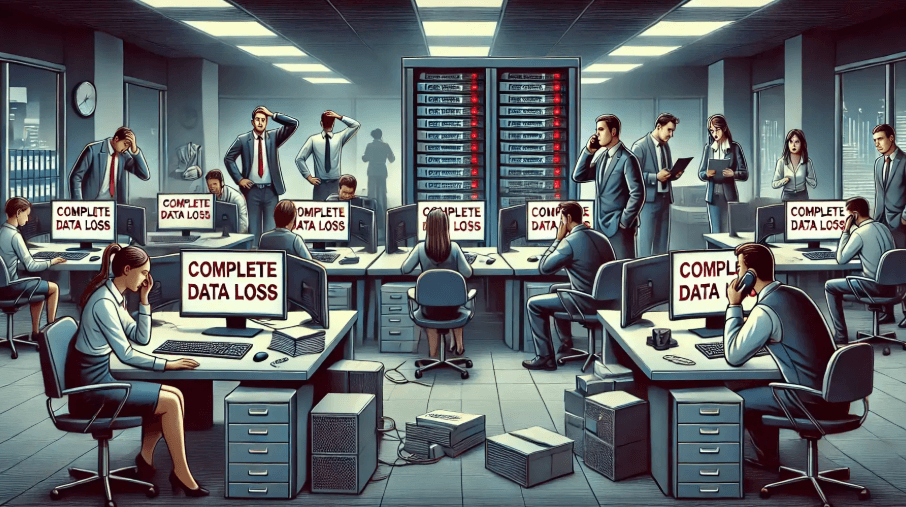
A data wipeout is the sudden, irreversible loss or corruption of your critical business data and operating systems. This goes far beyond an employee accidentally deleting a single spreadsheet. A true wipeout means your customer databases, financial records, and operational software are entirely inaccessible.
The causes generally fall into physical and technical categories. Physical threats include unexpected hardware failure, severe user error, and localized natural disasters like floods or fires that destroy your server room. Technical threats are increasingly malicious, driven by organized cybercrime networks that specifically hunt for vulnerabilities in your software.
Ransomware stands out as the fastest-growing and most destructive technical threat today. These attacks encrypt your entire system and demand massive payouts for the safe return of your data. In fact, global annual ransomware damages are predicted to reach $42 billion by the end of 2024. Mid-sized, growing businesses are highly targeted by these attacks precisely because they often lack the enterprise-grade defenses found in massive corporations.
The Hidden Costs of Prolonged IT Downtime
When a data wipeout occurs, the immediate operational impact is devastating. Your revenue drops to zero the moment your systems go offline. Employees cannot process orders, access client histories, or complete daily tasks, resulting in thousands of dollars in wasted payroll hours.
Beyond the immediate halt in productivity, you face unquantifiable long-term damage to your brand reputation. When sensitive client data is compromised, rebuilding that lost trust is incredibly difficult. Clients rely on you to keep their information safe, and a public data loss event sends a clear message that your internal security practices are lacking.
You also have to consider the exorbitant expenses of emergency break-fix IT services. When you scramble to hire a technician during a crisis, you pay premium emergency rates for hardware replacements and recovery efforts. This reactive approach is always more expensive than predictable, flat-rate IT support.
| Cost Category | Post-Disaster Emergency Costs | Proactive IT Investment |
|---|---|---|
| Service Rates | High hourly emergency fees, unpredictable billing. | Predictable, flat-rate monthly fee. |
| Hardware | Expedited shipping costs, forced immediate upgrades. | Budgeted, planned lifecycle replacements. |
| Downtime | Days or weeks of lost revenue and halted productivity. | Minutes to hours; high operational resilience. |
| Data Loss | High risk of permanent loss or costly ransom payments. | Minimal risk due to tested redundancy and backups. |
Essential Strategies for Disaster Recovery and Business Continuity
Basic Backups vs. Comprehensive Business Continuity
Many business owners operate under a false sense of security, believing that a standard, automated file backup is all they need. Unfortunately, these basic backups frequently fail when tested during a real emergency. Saving raw files to an external hard drive does not save the software, user profiles, and network configurations required to actually read those files.
A Business Continuity and Disaster Recovery (BCDR) plan is a holistic strategy that focuses on keeping your entire operation running. It maps out exactly how your business will function during an outage, establishing clear recovery time objectives and communication protocols. The goal is to minimize disruption to your clients and employees, not just store fragmented data.
Failing to plan for this level of operational continuity has severe consequences. More than 40 percent of small businesses never reopen following a disaster. A true BCDR plan ensures you do not become part of that statistic.
Implementing the 3-2-1 Backup Rule
The 3-2-1 backup rule is a proven, industry-standard method for secure data redundancy. It provides a clear framework for protecting your information without relying on heavy IT jargon. The rule dictates that you should maintain three total copies of your data.
These copies must be stored on two different media types, such as a local network-attached storage device and a dedicated backup server. Finally, one of those copies must be kept securely offsite. Modern cloud integrations make fulfilling this off-site requirement easier and more cost-effective than ever before.
This level of redundancy ensures a clean version of your data is always available to restore. Even if a fire destroys your local servers or a ransomware attack encrypts your primary network, your offsite cloud backup remains completely isolated and safe.
Leveraging Cloud Services and Virtualization
Enterprise-grade cloud services remove the heavy financial burden of owning, housing, and managing expensive physical servers in your office. Instead of paying for hardware that depreciates daily, you can rely on secure, scalable cloud environments. This drastically reduces your upfront capital expenditures while providing superior data protection.
Proxmox is a highly effective, open-source virtualization platform that centralizes your system management. Virtualization essentially creates a digital replica of your physical computers and servers. This means your operating systems and software run independently of the specific physical hardware sitting on your desk.
When you use virtualization, a hardware failure becomes a minor speedbump rather than a massive roadblock. You can spin up your critical systems almost instantly from a backup, achieving true operational resilience. Your team can get back to work while the broken physical machine is quietly replaced in the background.
Why Proactive IT Management is Your Best Defense
Waiting for an IT crisis guarantees unnecessary downtime and leads directly to the surprise technical expenses executives fear most. A reactive mindset treats technology as a chaotic, unpredictable force. By the time a server crashes or a hacker gains entry, the damage is already done, and the repair costs are compounding by the minute.
Eliminating Technical Roadblocks
Continuous, proactive monitoring changes this dynamic entirely. Expert IT teams watch your network around the clock, catching failing hardware and potential security threats long before they cause a disaster. A hard drive that shows signs of failure on a Tuesday can be replaced on a Wednesday night, resulting in zero disruption to your staff.
Regular, critical network assessments are a necessary part of this proactive strategy. These assessments uncover and patch hidden vulnerabilities in outdated systems, closing the doors that cybercriminals look for. Proactive management turns your technology into a strategic business advantage, providing stability and security rather than serving as a frustrating cost center.
Strengthening Operational Resilience
When ongoing network glitches disrupt your daily operations and threaten your critical data, shifting away from a reactive mindset becomes vital. Many growing organizations look to the expert IT services in Richmond delivered by Transparent Solutions to regain absolute control over their environment.
Transitioning your infrastructure to reliable managed IT services clears away technical barriers and works to guarantee maximum uptime for your team. By building advanced security protocols directly into your long-term business continuity strategy, you protect your company from unexpected financial strain and keep your workforce entirely focused on growth.
Choosing the Right Local IT Partner
Selecting the right managed service provider is a major decision that directly impacts your company’s growth and security. You should advise against hiring generic, reactive vendors who ultimately profit from your business’s downtime. If an IT company only makes money when your systems break, they have zero financial incentive to implement permanent, preventative fixes.
You need a long-term strategic partner that offers transparent, flat-rate pricing. This model allows you to easily manage your budgets and eliminate surprise invoices. When your IT provider charges a flat monthly fee, their profit depends on keeping your network stable and quiet.
Demand customized solutions tailored specifically to your company’s growth trajectory. Rigid, one-size-fits-all packages rarely address the unique software and compliance needs of a growing Richmond business. Engage providers who initiate the relationship with a free, no-obligation assessment of your current infrastructure, proving their value and expertise from day one.
Conclusion
Surviving a major data wipeout requires deliberate planning, proactive system monitoring, and a serious commitment to operational resilience. Technology moves too fast, and the threats are too severe to leave your business continuity to chance. You must actively protect your digital assets to ensure your physical doors stay open.
Simply hoping your basic automated backups will work during a catastrophic failure is not a viable disaster recovery strategy. True protection means implementing structured frameworks like the 3-2-1 rule and embracing modern virtualization. It means partnering with professionals who understand your specific operational needs.
Take control of your technology infrastructure today. Evaluate your network vulnerabilities and implement a comprehensive recovery plan so you can focus entirely on your business growth tomorrow.