Chemical forensics is like a hidden thread weaving through the tapestry of a crime scene, revealing connections that might otherwise remain obscured. You might wonder how the intricate dance of molecules can link a suspect to a crime or uncover crucial evidence. By exploring the methods and applications of chemical forensics, you’ll uncover the sophisticated techniques that not only enhance legal investigations but also shape the pursuit of justice itself. What’s waiting to be discovered?
How Does Chemistry Help Solve Crimes?
While you mightn’t realize it, chemistry plays a crucial role in solving crimes by providing scientific evidence that can link suspects to criminal activity.
Toxicology analysis identifies substances in bodily fluids, revealing potential poisoning or drug use.
Additionally, trace evidence, such as fibers or residues, helps establish connections between victims and suspects, enhancing the overall investigative process and ensuring justice is served effectively.
Understanding Chemical Forensics: An Overview of Chemical Evidence
Chemical forensics encompasses various techniques and methodologies that analyze chemical evidence to support criminal investigations.
By examining the chemical properties of substances found at crime scenes, you can uncover vital information.
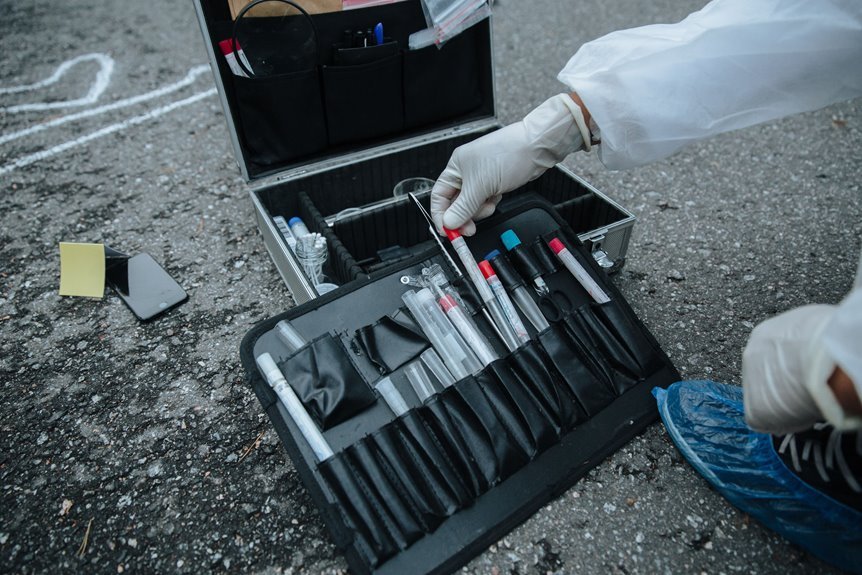
Evidence collection plays a crucial role in this process, ensuring that samples are preserved and analyzed accurately.
Understanding these principles helps you appreciate the intricate relationship between chemistry and law enforcement.
Cutting-Edge Techniques for Analyzing Chemical Evidence
Advancements in technology have revolutionized the way forensic scientists analyze chemical evidence. Techniques like mass spectrometry analysis enable precise identification of trace evidence, allowing for deeper insights into criminal activities.
These cutting-edge methods enhance the accuracy of results and improve the reliability of forensic investigations, ensuring that every detail counts in the pursuit of justice and the protection of individual freedoms.
How Is Chemical Forensics Used in Real Cases?
In numerous criminal cases, chemical forensics plays a crucial role in uncovering evidence that can lead to convictions or exonerations.
You’ll find toxicology applications vital in determining substance involvement in crimes. Forensic analysis reveals critical information about drugs, poisons, or chemicals present, aiding law enforcement in constructing accurate narratives.
This precision in evidence can significantly impact case outcomes and justice served.
Conclusion
In conclusion, chemical forensics is a vital tool in modern investigations, linking 90% of cases to chemical evidence in some studies. By utilizing advanced techniques like mass spectrometry, forensic scientists provide crucial insights that enhance the integrity of the legal process. As you explore the impact of chemical analysis in solving crimes, remember that accurate evidence collection and preservation are essential for achieving justice. This scientific approach continues to evolve, shaping the future of law enforcement.