The landscape of education in the United States is undergoing a profound transformation. What was once a system defined by physical classrooms, heavy textbooks, and rigid schedules is evolving into a dynamic, flexible, and inclusive ecosystem. At the heart of this revolution is technology. From the inner cities of New York to the rural expanses of Wyoming, digital innovation is dismantling traditional barriers, making quality education more accessible than ever before for high school and college students.
This shift isn’t just about replacing paper with screens; it’s about fundamental equity. For decades, a student’s educational opportunities were largely dictated by their zip code. Today, technology is acting as a great equalizer. Whether you are a high school senior preparing for the SATs or a graduate student pursuing a specialized degree while working full-time, the digital age offers tools tailored to your unique needs.
The Rise of Digital Equity: Bridging the Geographic Gap
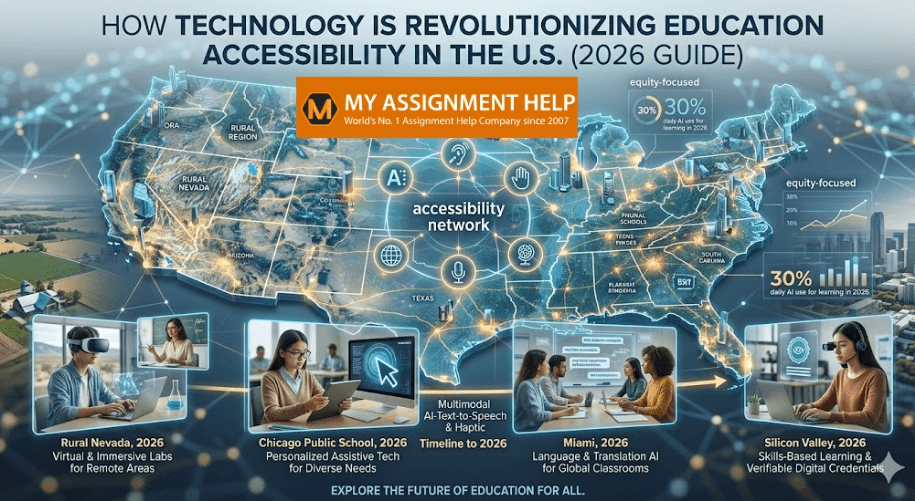
One of the most significant impacts of technology is the elimination of geographic constraints. In the past, students in remote or underserved areas often lacked access to Advanced Placement (AP) courses, specialized electives, or expert instructors.
Virtual Classrooms and Online Learning
The proliferation of robust online learning platforms has changed the game. High schools now partner with digital providers to offer a curriculum that their local budgets or staffing might not otherwise support. For students, this means the ability to study everything from Mandarin Chinese to Quantum Physics, regardless of whether their local school has a teacher for it. Many students also utilize these platforms to find specialized law assignment help when navigating complex legal electives or pre-law tracks that require professional insight. Furthermore, the integration of synchronous and asynchronous models allows students in different time zones—from the Eastern Seaboard to Hawaii—to access the same elite-level instruction.
High-Speed Internet and the Rural Divide
While the “digital divide” remains a challenge, federal and state initiatives in the U.S. have prioritized broadband expansion. This connectivity allows students in rural America to participate in real-time webinars, collaborate on international projects, and access the same digital libraries as students at Ivy League institutions. The 2026 landscape shows a narrowed gap, where satellite internet and 5G expansion have made “dead zones” a thing of the past for most American learners.
Personalized Learning: Catering to Diverse Needs
Education is not one-size-fits-all. Every student has a unique learning style, pace, and set of challenges. Technology enables “personalized learning,” a pedagogical approach that adapts the instruction to the individual.
Adaptive Learning Software
AI-driven platforms can now assess a student’s strengths and weaknesses in real-time. If a student is struggling with calculus, the software identifies the specific gap in their knowledge—perhaps a foundational misunderstanding of algebra—and provides targeted exercises to bridge that gap. Similarly, for those tackling quantitative business courses, digital tools and expert finance homework help can provide the necessary scaffolding to master complex fiscal theories. This prevents students from falling behind and allows high-achievers to move ahead without waiting for the rest of the class. This “scaffolding” technique is essential for US students tackling rigorous STEM and economic subjects.
Support for Students with Disabilities
Perhaps the most noble achievement of educational technology is the empowerment of students with disabilities. Assistive technologies have opened doors that were previously locked:
- Speech-to-Text and Text-to-Speech: Essential for students with visual impairments or dyslexia.
- Closed Captioning and Sign Language Apps: Making auditory content accessible to the deaf and hard-of-hearing community.
- Alternative Input Devices: Allowing students with motor impairments to navigate computers and participate in digital labs.
Breaking the Financial Barrier: The Democratization of Resources
The cost of education in the United States, particularly higher education, has skyrocketed over the last few decades. Technology provides several avenues to mitigate these costs, making a degree more attainable for the average American student.
Open Educational Resources (OER)
The “textbook bubble” is finally bursting. Many professors and institutions are moving toward OER—freely accessible, openly licensed text, media, and other digital assets. Students can now access high-quality academic materials without spending thousands of dollars per semester on physical books. This shift is particularly impactful for community college students and those in state university systems where hidden costs often lead to academic friction.
Massive Open Online Courses (MOOCs)
Platforms like Coursera, edX, and Khan Academy offer courses from top-tier universities for free or at a fraction of the cost of traditional tuition. While a MOOC might not always replace a full degree, it allows high school students to earn college credit (via CLEP exams) or gain certifications that improve their employability and college applications.
Digital Support and Tutoring
Accessing expert help no longer requires an expensive private tutor who charges $100 an hour. Online academic assistance platforms have streamlined how students get help. Whether it’s clarifying a complex historical event or getting feedback on an essay, students can find professional guidance online. For those looking for comprehensive academic support, Myassignmenthelp.com provides specialized assistance, ensuring that students can navigate their coursework successfully regardless of their immediate support system.
Enhancing Engagement through Immersive Technology
Engagement is a critical component of accessibility. If a student isn’t engaged, the information isn’t accessible to their mind. Modern tech uses “gamification” and immersion to make learning more intuitive.
Virtual Reality (VR) and Augmented Reality (AR)
Imagine a history student “walking” through the streets of ancient Rome, or a biology student “traveling” through the human bloodstream. VR and AR turn abstract concepts into experiential reality. This is particularly beneficial for kinesthetic and visual learners who may struggle with traditional lecture-based formats. In 2026, many US universities have established “VR Labs” to help medical and engineering students practice complex procedures in a risk-free digital environment.
Collaborative Tools and Professional Readiness
Tools like Google Workspace, Slack, and Trello have taught students how to work in the modern professional environment. These platforms allow for seamless collaboration on group projects, even if the team members are in different time zones. This fosters a sense of community and collective learning that transcends the physical walls of a school. Mastering these “Digital Skills” early is now a prerequisite for career success in the 2026-2027 academic cycle.
Flexibility for the Modern “Non-Traditional” Student
The “traditional” student—one who finishes high school and immediately goes to a four-year college without working—is becoming less common in the United States. Many American students today are “non-traditional,” meaning they might be working jobs, raising families, or returning to school later in life.
See also: Direct Assistance Support Link 6147320720 Service Contact
Asynchronous Learning and Productivity
Technology allows for asynchronous learning, where students can access lectures and assignments on their own schedule. This flexibility is vital for accessibility. It allows a student working a 9-to-5 job to watch a physics lecture at midnight or participate in a forum discussion on their lunch break. To manage this, many are turning to evidence-based productivity frameworks like “Deep Work” and the “Pomodoro Technique” to maximize their limited study windows.
Mobile Learning (M-Learning)
With the ubiquity of smartphones, the classroom is now in the student’s pocket. Educational apps allow students to study during their commute, listen to academic podcasts, or complete quick quizzes while waiting in line. This “micro-learning” makes education fit into the cracks of a busy life, ensuring that even the most time-constrained student can progress.
Ethical Integration and Agentic Workflows
We are currently standing at the dawn of the AI era in education. While AI brings challenges regarding academic integrity, its potential for accessibility is unmatched when used ethically as a tool for “Human-AI Collaboration.”
Writers and 24/7 Support
Imagine every student having a personal writer available at 3 AM. AI chatbots can provide instant feedback on coding, explain a complex chemical reaction in simpler terms, or help a student outline a research paper. This “on-demand” support ensures that no student is left stuck and frustrated for long periods.
Ethical AI and Programming Help
The focus in 2026 has shifted from “AI as a shortcut” to “Agentic AI.” Students are learning to use Large Language Models (LLMs) to brainstorm ideas, check their logic, and receive specialized programming help. This prepares them for a workforce where AI literacy is no longer optional but a core competency.
Language Translation for ESL Learners
For English as a Second Language (ESL) students in the U.S., language can be a significant barrier to education. Real-time AI translation tools can translate lectures and reading materials into a student’s native tongue, helping them grasp complex concepts while they continue to improve their English proficiency.
Challenges to Overcome
While technology offers incredible solutions, it is not a magic wand. For education to be truly accessible in the U.S., several hurdles must be addressed:
- The Privacy Concern: Protecting student data in a digital-first world is paramount.
- Teacher Training: Technology is only as effective as the person implementing it. Educators need ongoing professional development.
- The Human Connection: Technology should augment, not replace, the mentor-student relationship.
Conclusion
Technology is fundamentally rewriting the story of American education. It is turning “exclusive” opportunities into “inclusive” ones. By lowering costs, offering flexible schedules, and providing personalized tools, digital innovation ensures that every student in the United States—regardless of their background or physical ability—has a fair shot at success.
As we look toward the future, the integration of technology in education will only deepen. For students, the message is clear: the resources are at your fingertips. Whether you are navigating high school or pursuing a PhD, the digital world is your classroom. And for those moments when the workload feels overwhelming, seek out Myassignmenthelp.com to help you stay on track and achieve peak productivity.
Frequently Asked Questions
Q.1 How does technology improve accessibility for students with disabilities in the US?
Technology provides assistive tools such as screen readers, speech-to-text software, and adaptive input devices. These innovations allow students with visual, auditory, or motor impairments to engage with the same curriculum as their peers, ensuring that physical or sensory limitations do not hinder academic progress.
Q.2 What is “Digital Equity” and why is it important for American high schoolers?
Digital equity ensures that all students, regardless of their zip code or socioeconomic status, have access to high-speed internet and the devices necessary for modern learning. In the US, this is critical for rural and underserved urban students who need these tools to access AP courses, digital libraries, and college prep resources.
Q.4 How can online academic support services from Myassignmenthelp.com assist US students?
Online support services provide specialized guidance that may not be available locally. Whether it’s 24/7 tutoring, programming help, or essay feedback, these platforms help students bridge the gap between classroom lectures and independent study, which is especially helpful for non-traditional students balancing work and school.
Q.4 What digital skills are most important for college readiness in 2026?
Beyond basic computer literacy, students should focus on AI prompt engineering, collaborative project management (using tools like Trello or Slack), and data fluency. Mastering these digital skills early ensures a smoother transition from high school to the professional workforce.
About the Author – Drake Miller
I am a skilled blog author associated with Myassignmenthelp.com, known for creating engaging and informative academic content. He specializes in simplifying complex topics, helping students understand challenging subjects with ease. His writing focuses on practical insights, research accuracy, and student-centric solutions that support academic success and effective learning experiences worldwide. His work consistently meets quality standards and deadlines efficiently.